Grace Brooks was born enslaved in Talbot. One local life puts the year at 1740 and the place at Trappe. The Hill Community guide puts her birth at 1734. The Easton paper that printed her death said she was perhaps near seventy in 1810, which leans toward the later year. Either way she was a grown woman with a trade before the Revolution was over.
The trade was midwifery. She delivered children for Black families and white families and was paid.
The purchases are the scene that remains on paper.
In 1788 she used that money to buy her own freedom and the freedom of her daughter Phebe and her granddaughter Priscilla, for £70. She later bought her son David for £75 and her granddaughter Nancy Walker for £40, and freed them as she brought them out. In 1792 she bought a half-acre in Easton with a one-story house on it — less than three hundred square feet, a large fireplace, a walnut table and six chairs, a chicken coop and a well out back. The 1798 assessment put the dwelling at fifty dollars. She is the first African American woman known to own land in the town. James Freeman is named in the same project as Easton's first recorded Black landowner. Brooks is the first woman on that list, and the one whose working life left the longest paper.
The lot sat on what became The Hill. The 1790 census already counted hundreds of free Black people in Easton.
She wrote a will in 1808 and signed herself “a free black woman.” She left the use of land to “my friend Susan or Suckey Bailey, a black woman,” and divided the rest among four grandchildren: Phill, Jane, and Nancy, children of Phebe, and Grace, daughter of David.
She died March 12, 1810. The Republican Star printed an obituary. It called her a native of Talbot, noted the long decline she had borne, and said that by industry and economy, after emancipating herself, her children, and her grandchildren, she had left decent property to her descendants. Women's deaths, of any color, were not commonly written that way in an Easton paper in 1810.
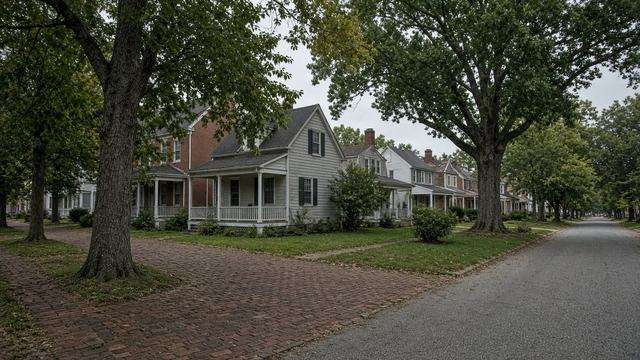
The house is gone. The neighborhood is not. The Hill Community Project and the National Trust now treat the streets around Hanson and Harrison as one of the oldest continuously inhabited free Black neighborhoods in the country. Brooks is a founding name in that work.
Sources: Republican Star obituary, March 1810; Brooks will, 1808, as printed by the Hill Community Project; Talbot Historical Society life of Grace Brooks; National Trust / Dale Green reporting on The Hill. Birth year 1734 vs. 1740 is a split. Published sources name her as the first African American woman known to own land in Easton; they do not support calling her the first person in the county, of any sex, to buy freedom.
Source: Talbot Historical Society
Drawn from public records; drafted with AI and edited by Peter Gorman before publication.
Signed comments are held for review, then published. Obvious spam is rejected before it reaches the editor. Letters and comments.
No published comments yet.