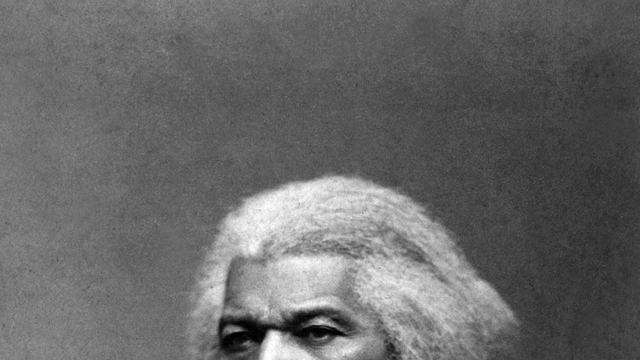
Frederick Douglass was born Frederick Augustus Washington Bailey on a farm off Tuckahoe Creek, near Hillsborough and about twelve miles from Easton. He did not know the day. He counted himself, later, as a child of 1818. His mother was Harriet Bailey. His grandparents were Isaac and Betsey Bailey. Of his father he knew only rumor.
The early years were split between the grandmother's cabin on the Tuckahoe and the great house at Wye, the Lloyd place. There an overseer named Austin Gore shot a man named Demby dead in the creek. Douglass wrote that scene into the book that made him. He was sent as a small boy to the Auld household in Baltimore, taught the beginnings of letters by Sophia Auld until the teaching was stopped, and sent back to the Shore as a teenager to be broken. Edward Covey did the breaking on a farm near St. Michaels. Douglass fought him.
The jail is the scene Talbot still holds.
In 1836 he and other men planned to take a canoe up the Bay. The plan was betrayed. They were dragged to the jail in Easton. The others were released. He sat in the cell about a week while traders looked in. Hugh Auld sent him back to the Baltimore shipyards. On September 3, 1838, wearing a sailor's protection that was not his, he rode the train out of Maryland. In New Bedford, Nathan Johnson, who had been reading Scott, named him Douglass. He kept Frederick.
The rest of the life is national and is not retold here as if it happened on Dover Street. Three autobiographies. The North Star. The rooms with Garrison and then the break with Garrison. The recruiting speeches for the Colored Troops. The meetings with Lincoln. Cedar Hill. He died in Washington on February 20, 1895.
What Talbot still has is the beginning and the return. In 1878 he came home and dedicated, on the same day, the new brick at Bethel A.M.E. and the new church at Asbury. Both stand on The Hill, the free Black neighborhood that had been living in Easton since before he was born. The Jay Hall Carpenter statue went up on the courthouse lawn in 2011, on the same ground as the jail.
Easton holds the jail and the statue. The Tuckahoe holds the birth. He is the county's.
Sources: Narrative of the Life of Frederick Douglass, an American Slave (1845); later autobiographies; Frederick Douglass Papers Project; HMDB and Visit Maryland notes on the 1878 dedications of Bethel (built 1877) and Asbury. Birth day unknown; 1818 is the year he used. The Unionville Dembys are treated under that village, not as a footnote to this life.
Source: Frederick Douglass Papers
Drawn from public records; drafted with AI and edited by Peter Gorman before publication.
Signed comments are held for review, then published. Obvious spam is rejected before it reaches the editor. Letters and comments.
No published comments yet.